Designing the platform when the product is a research tool
Solo design lead in a 4-person startup, I reframed Exabyte from a single tool into a platform onboarding organizations and universities — fixing the IA, moving to a Google-system foundation, and giving scientists a UI that matched the way they actually worked.
Solo Design Lead
1 designer in a 4-person startup
End-to-end UX · IA · Visual · Move to Material · Onboarding for orgs and universities
shipped
Context
Exabyte, later Mat3ra, is a material-science platform for simulating synthetic materials through atom-by-atom crystal lattice models and computational workflows. The product was scientifically deep: users were scientists in universities and corporate R&D labs, and a poor interaction model could mean wasted setup time before expensive computation.
The company had a bigger ambition than a single expert tool. It needed to become a platform that organisations could onboard into, search across, compare materials within, and use as part of a repeatable research workflow. The IA, navigation, and visual language had not caught up to that shift.
Role & team
What I led
I led three repositionings:
- Discovery and reframing: I moved the mental model from "a tool you log into" to "a platform that onboards an organisation." That changed the default actions, first-run experience, account model, and IA root.
- IA, search, and navigation: I rebuilt the navigation around scientists' actual workflows: finding materials, comparing candidates, configuring simulations, reviewing results, and returning to previous research states.
- Move to Material: I adopted Google's Material foundation rather than continue maintaining a bespoke language at startup scale. That freed design time for the product-specific complexity: computation setup, simulation results, organisation administration, and scientific search.
Process — three acts
Act I — Discovery
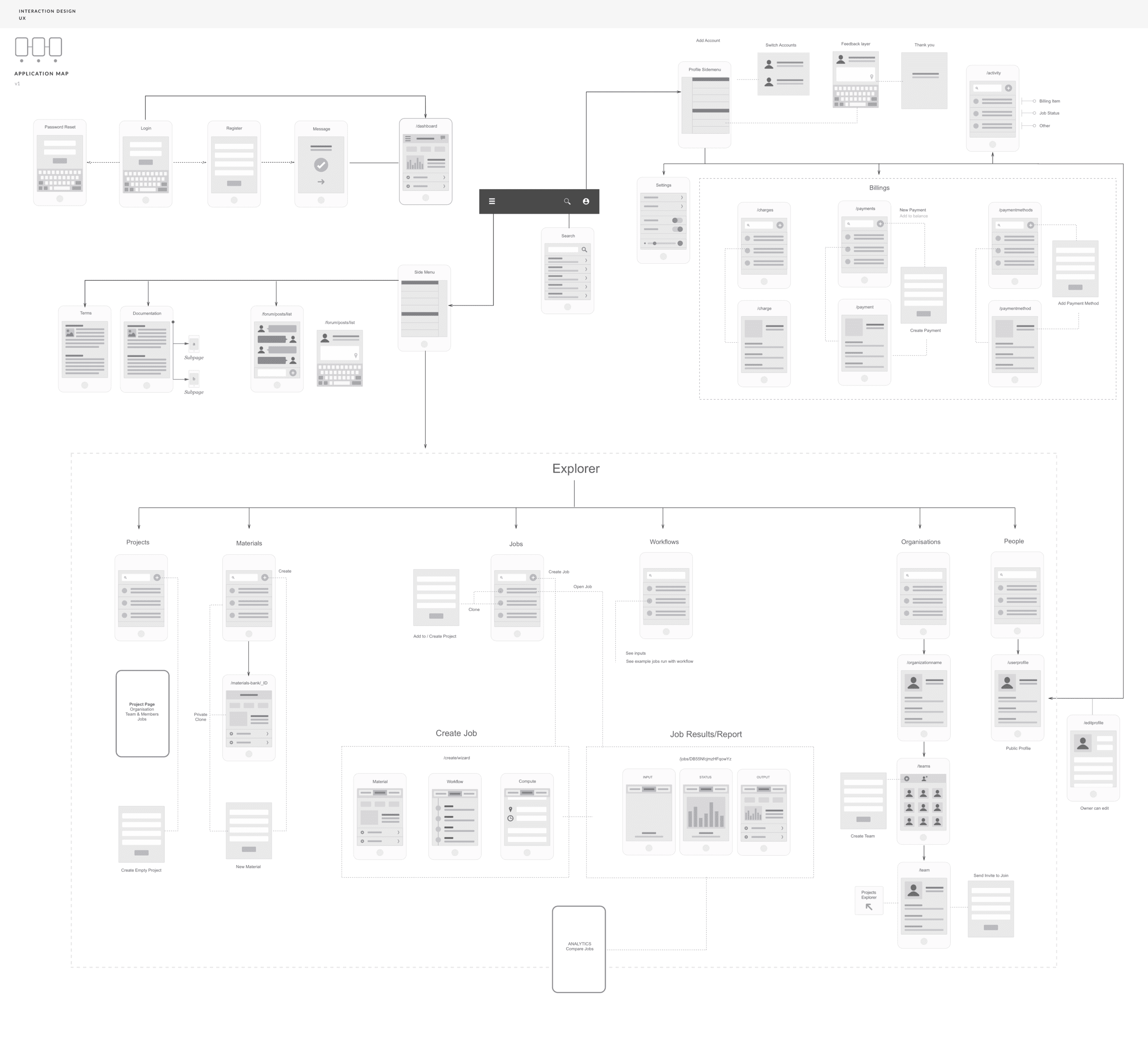
I started with field-study work: identifying the principal users, interviewing scientists, mapping their needs into flows, and comparing the actual research workflow with the product's assumed workflow. The output included personas, an information-architecture schema, and principal user flows for the founders and engineering team.
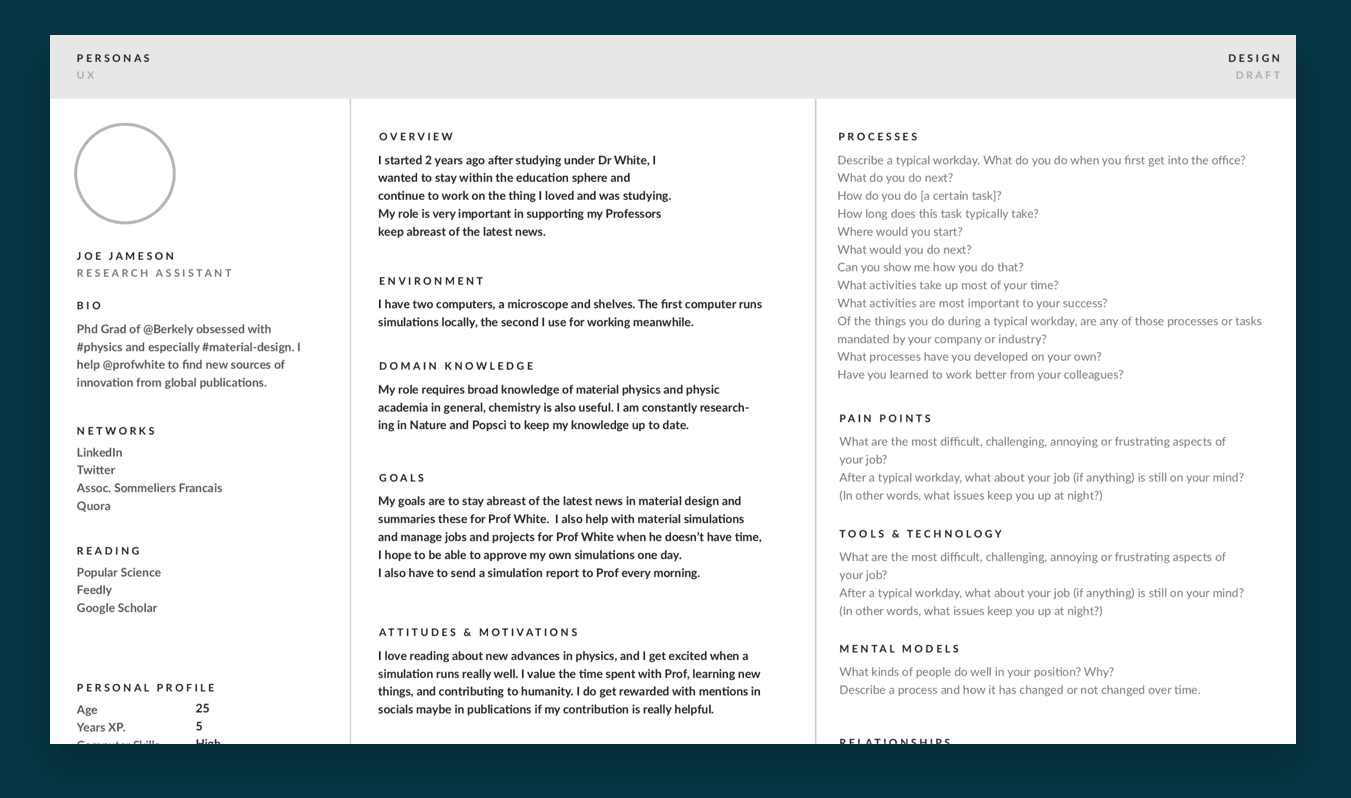
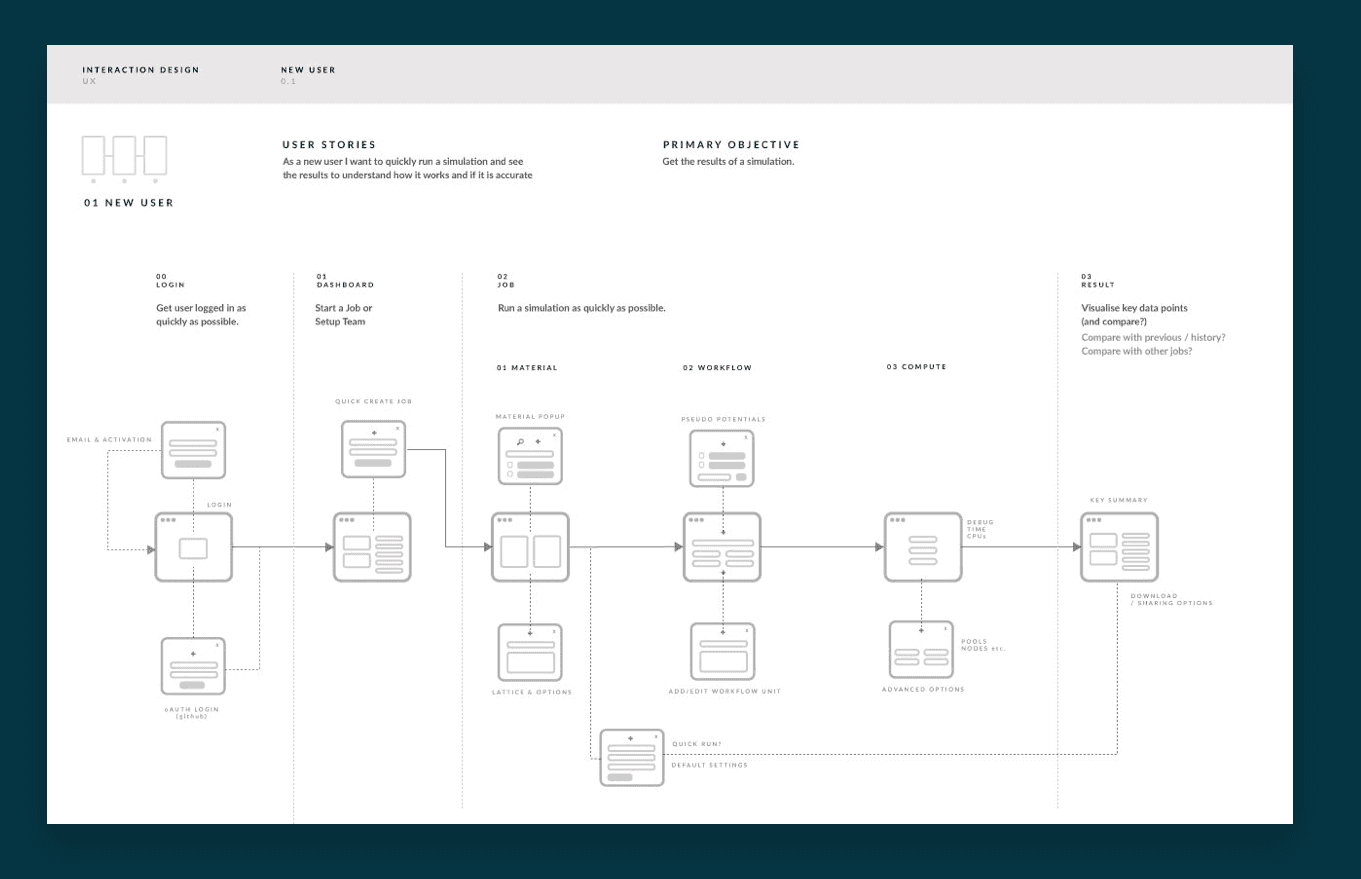
The key move was to treat onboarding as part of scientific work, not as a generic account setup problem. A university lab, a corporate R&D group, and an individual scientist needed different defaults, permissions, and paths into the same computational system.
Act II — IA + system
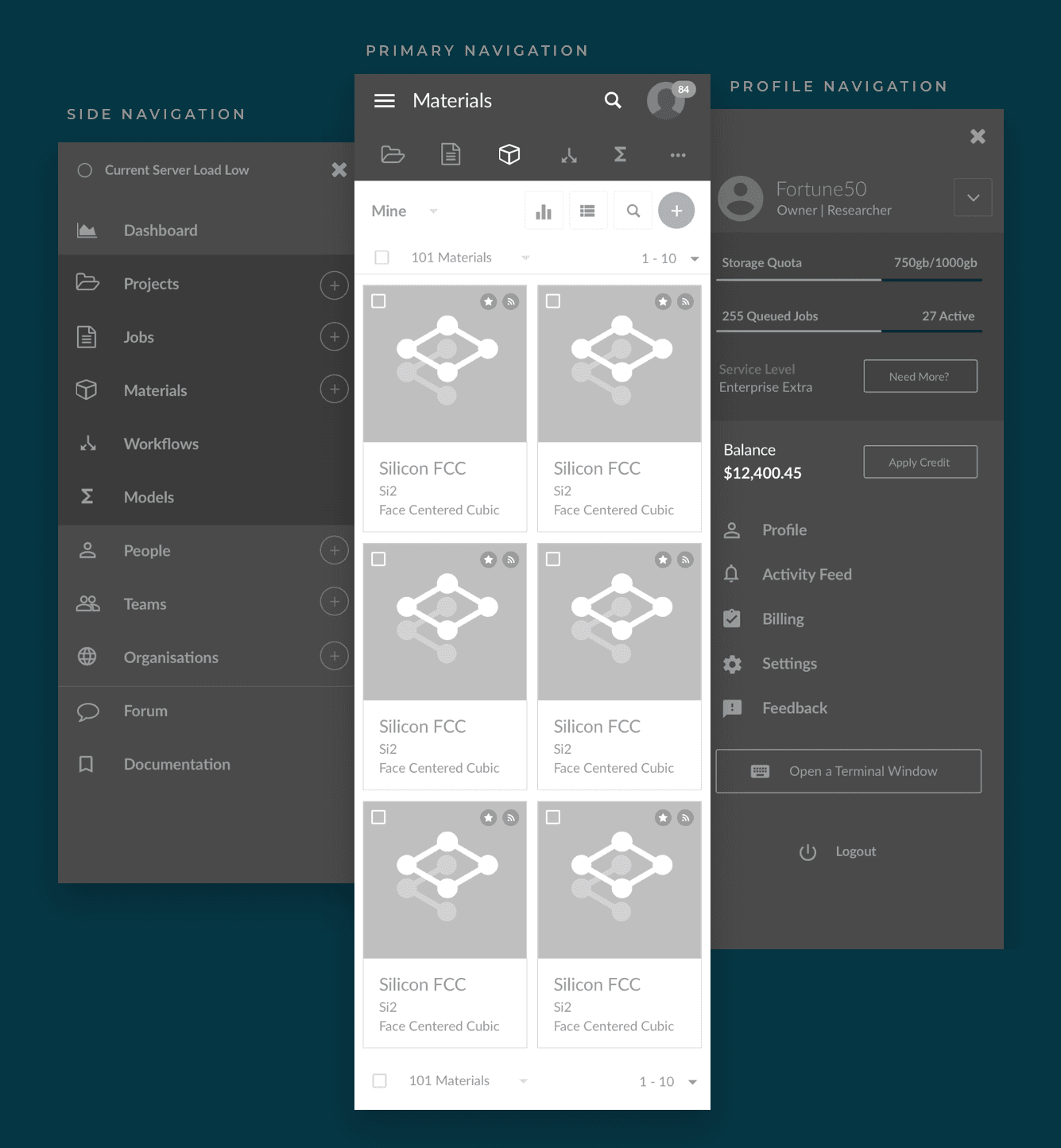
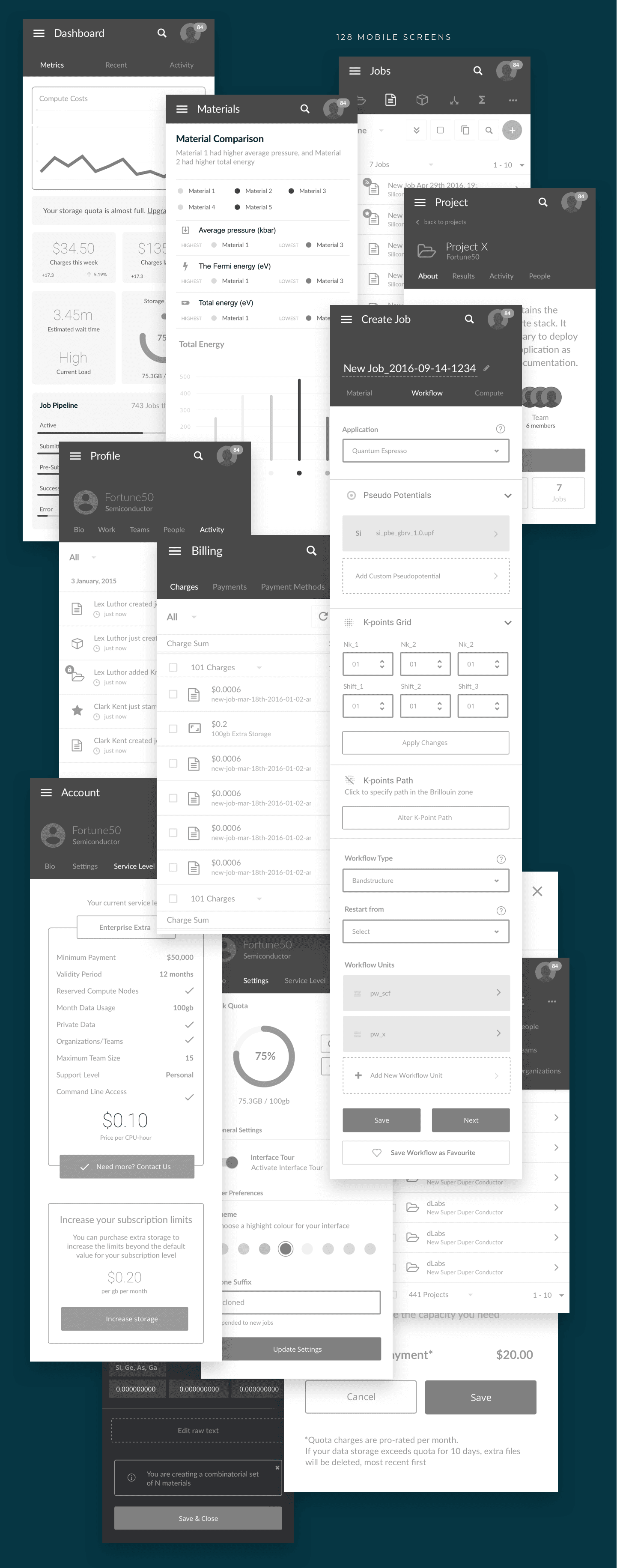
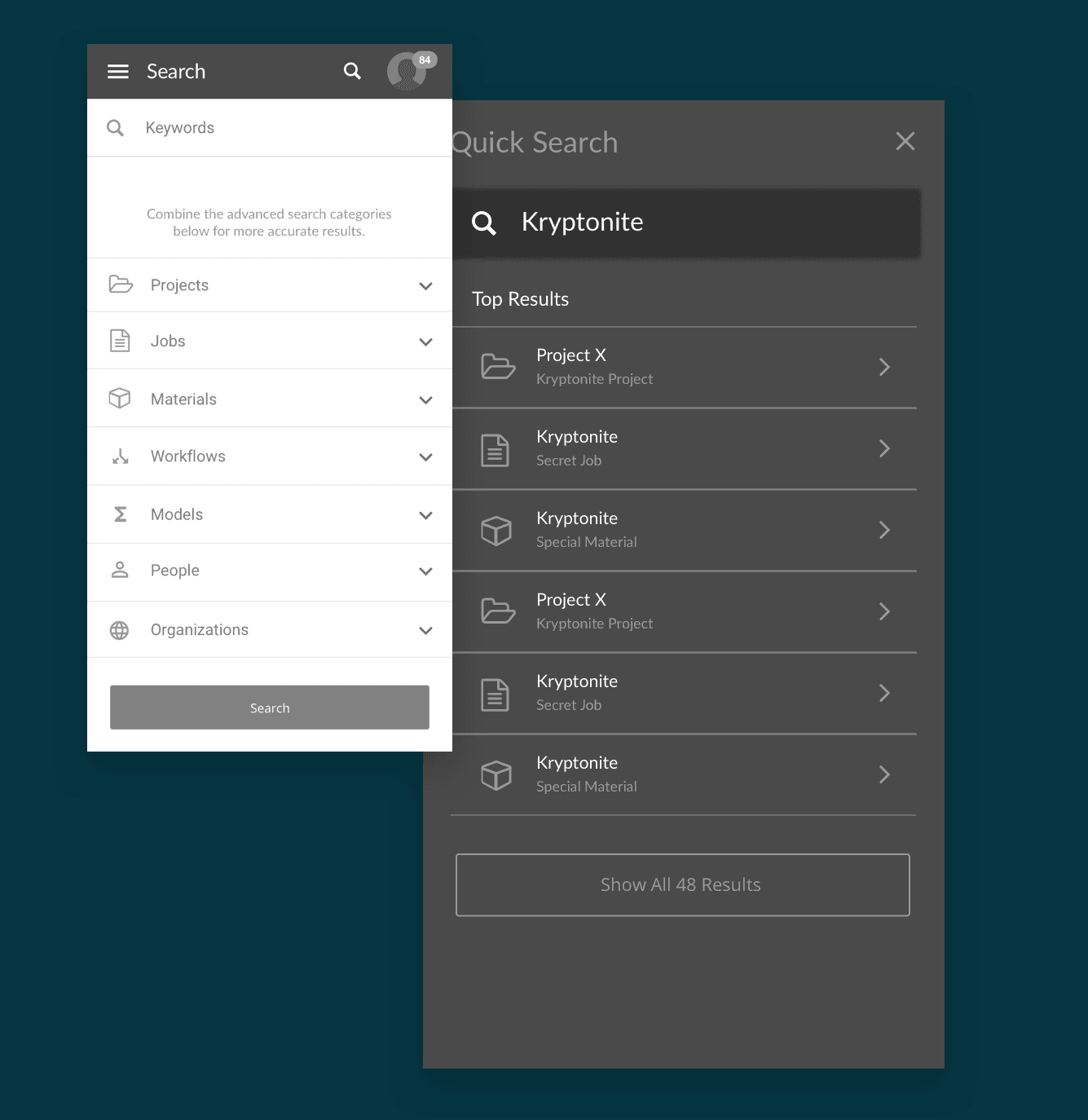
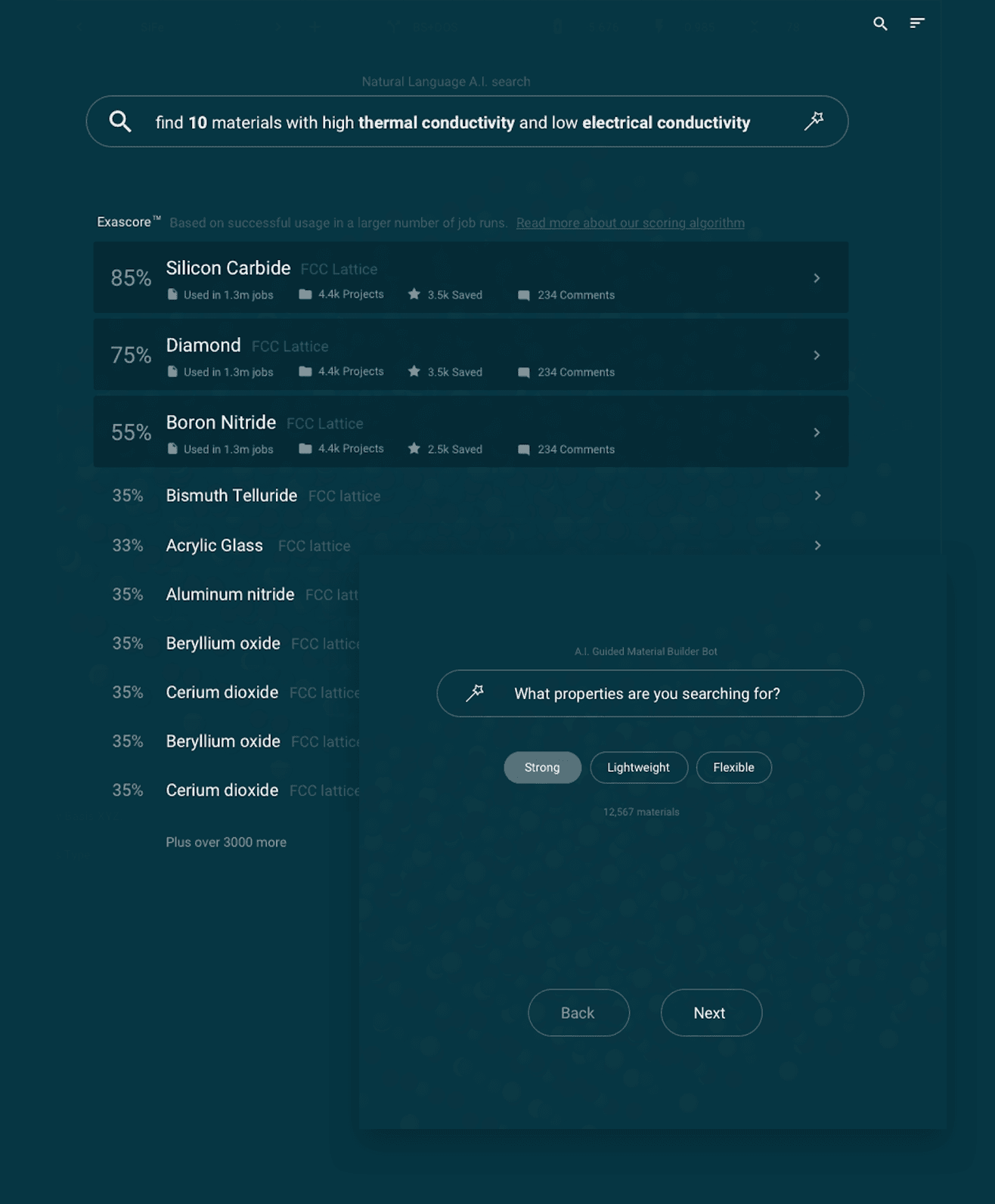
Search became especially important. I worked through standard search and a smarter scoring model that could surface better materials from Exabyte's own algorithmic understanding, so the product could help scientists narrow the field before committing to deeper analysis.
Act III — Scale and handoff
The handoff focused on patterns the small engineering team could extend without me in the room. I documented the new IA, left design files and prototypes, and designed core surfaces around reusable Material patterns so the team could keep shipping without maintaining a fragile bespoke UI system.
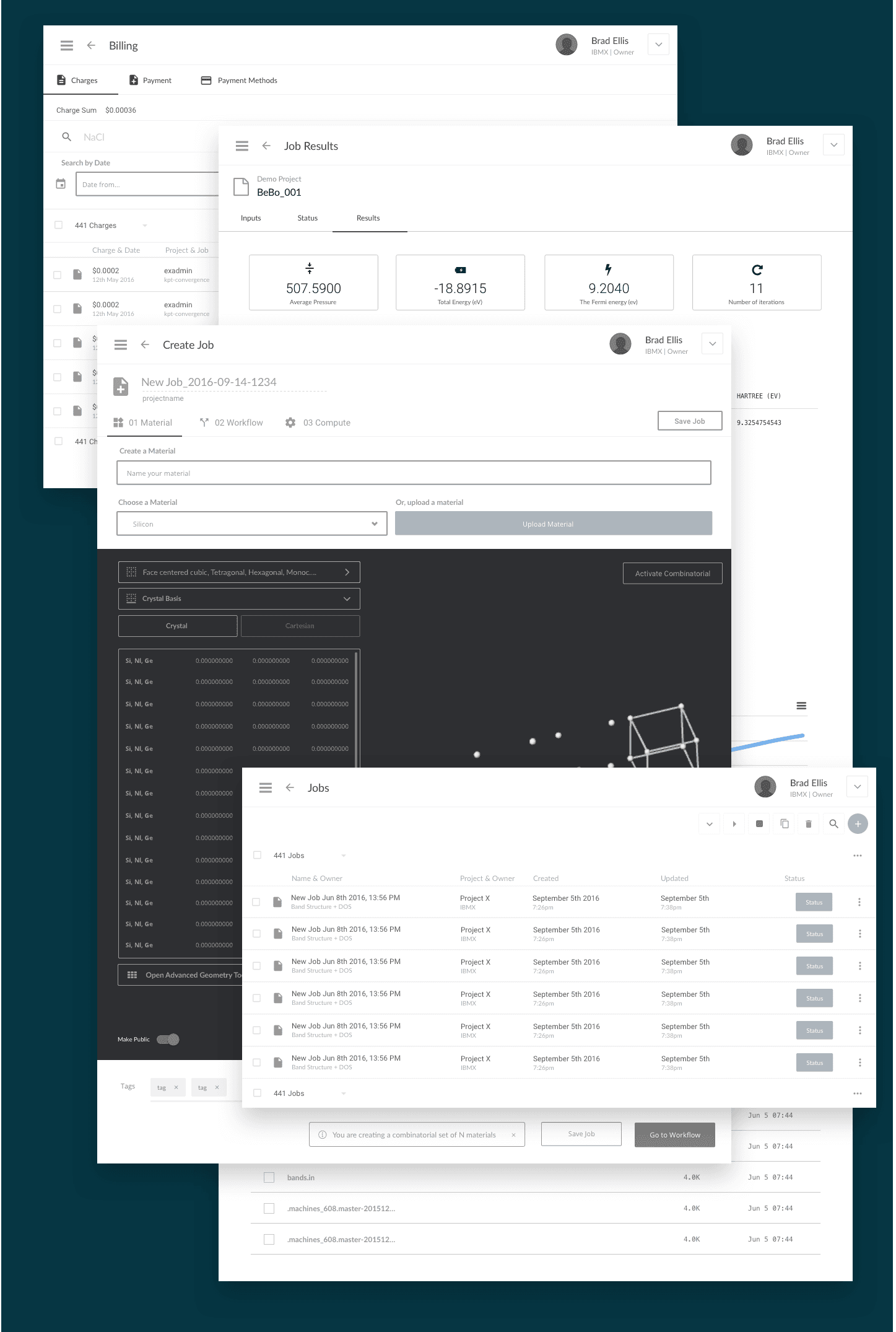
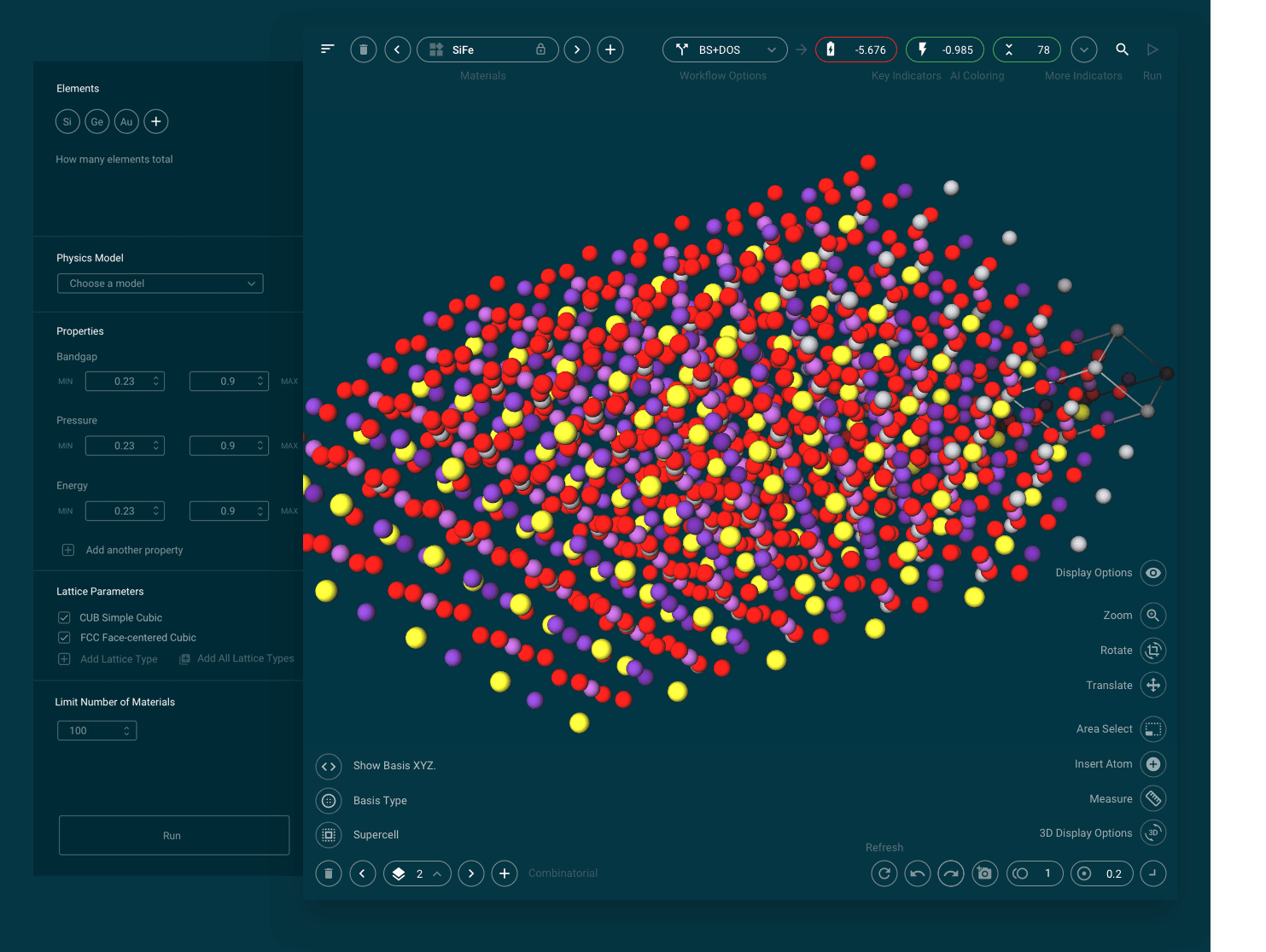
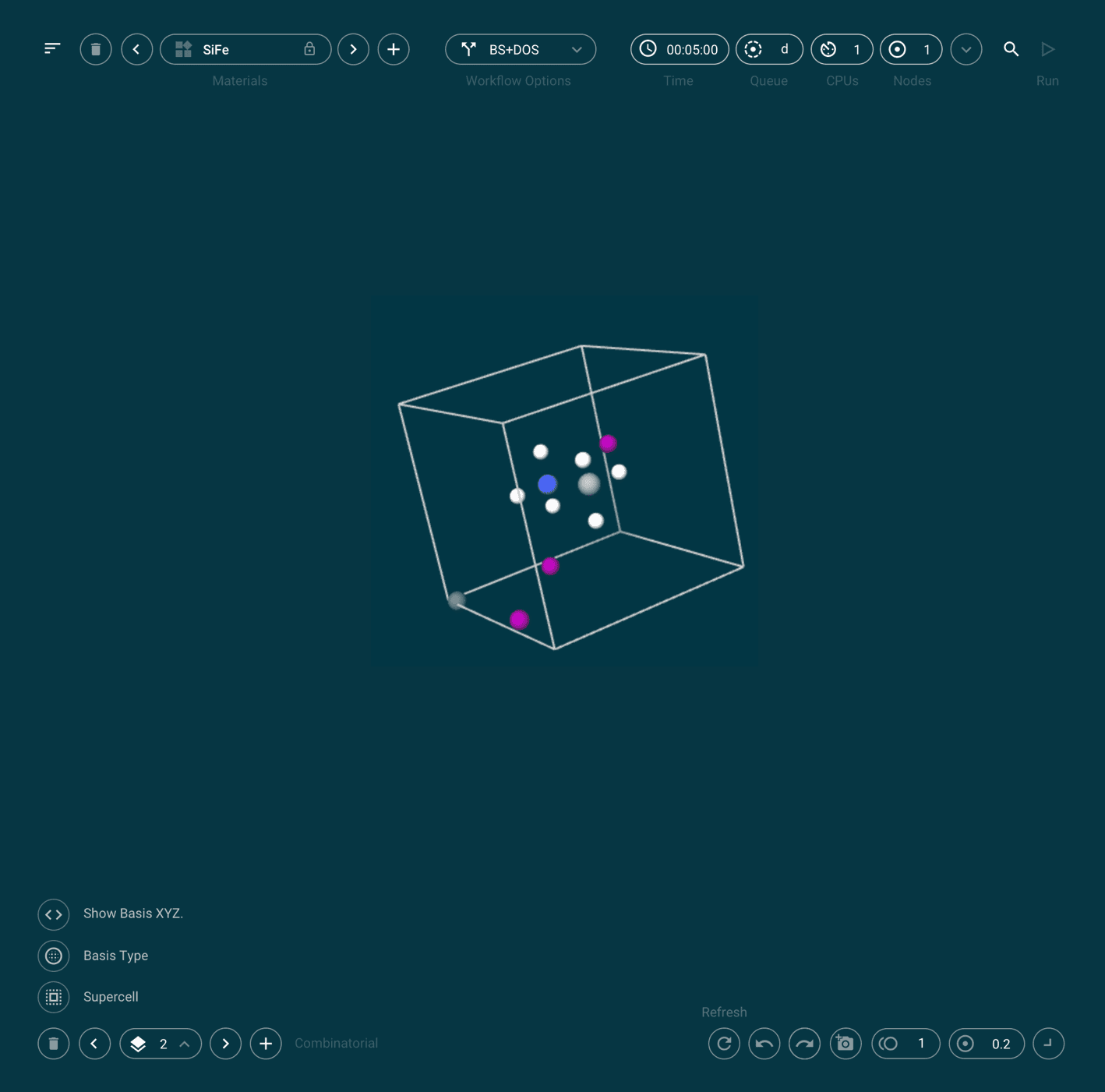
One important surface was a single-page Material Editor: a workspace with live results and guided pre-rendering cues, designed to help users understand whether a material setup was worth running before spending compute on a full analysis.
Outcome
- Platform reframe: repositioned the product narrative from tool to platform for organisations, universities, and research teams.
- IA and navigation: shipped a new information architecture, search model, and navigation structure around scientific workflows.
- Product surface: produced 200+ mobile and desktop wireframes across onboarding, dashboards, material search, comparison, compute, and help flows.
- System focus: moved the UI onto Material so the startup could spend more attention on domain-specific product problems.
- Future-facing work: explored AI and scientific-computing UI ideas early, including guided search and natural-language style interaction concepts.
What I'd do differently
I would move even faster toward full Material adoption. At the time, I kept more bespoke visual identity in the system because the product had a distinctive scientific domain and I wanted it to feel owned. In hindsight, the sharper startup move was to standardise the commodity layer earlier, then spend the creative energy on the hard parts only Exabyte had: scientific search, simulation setup, comparison, and compute-aware decision support.